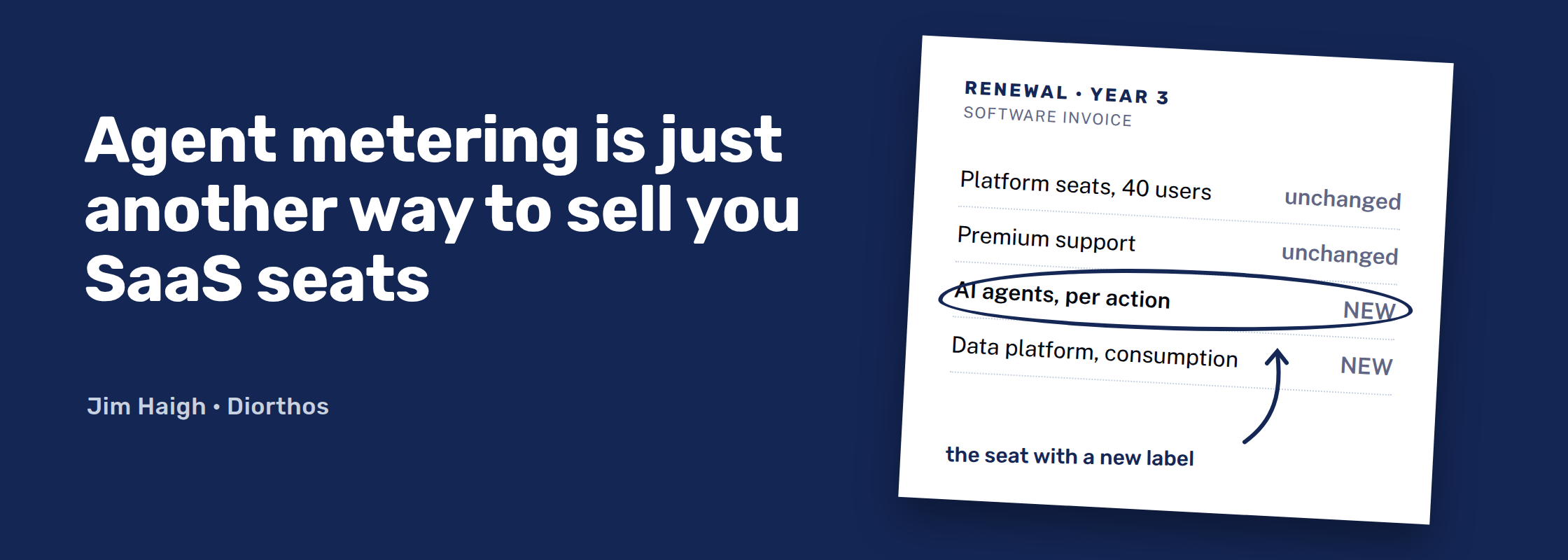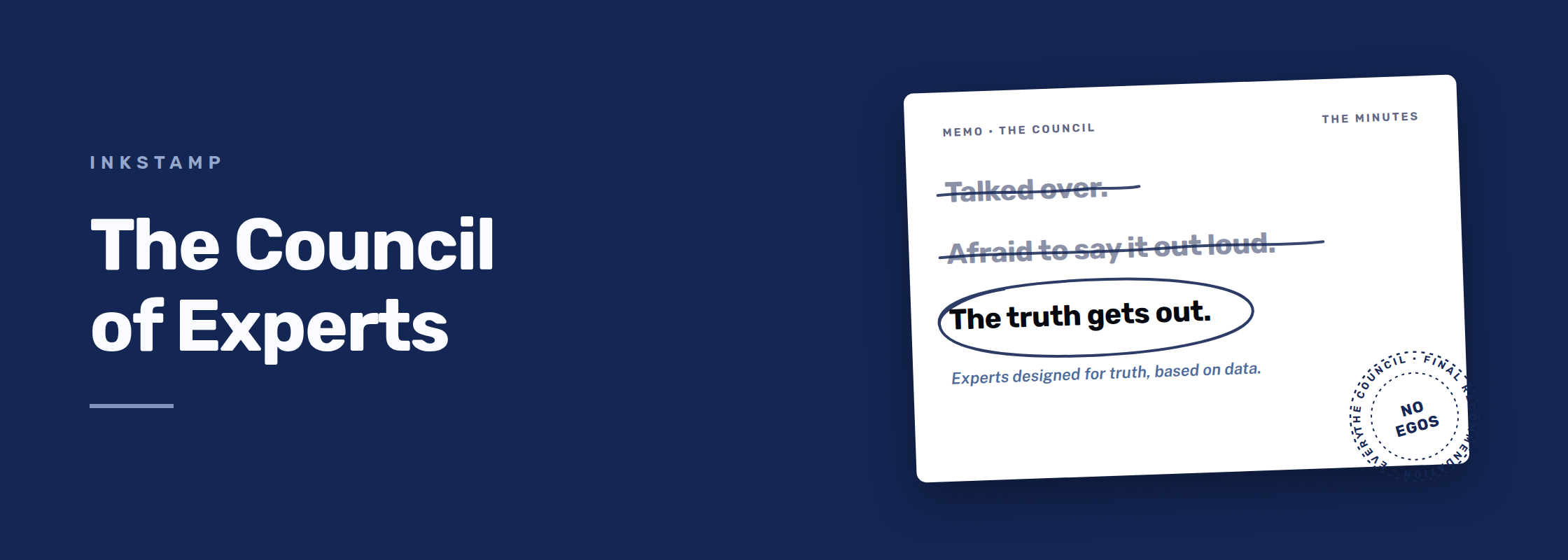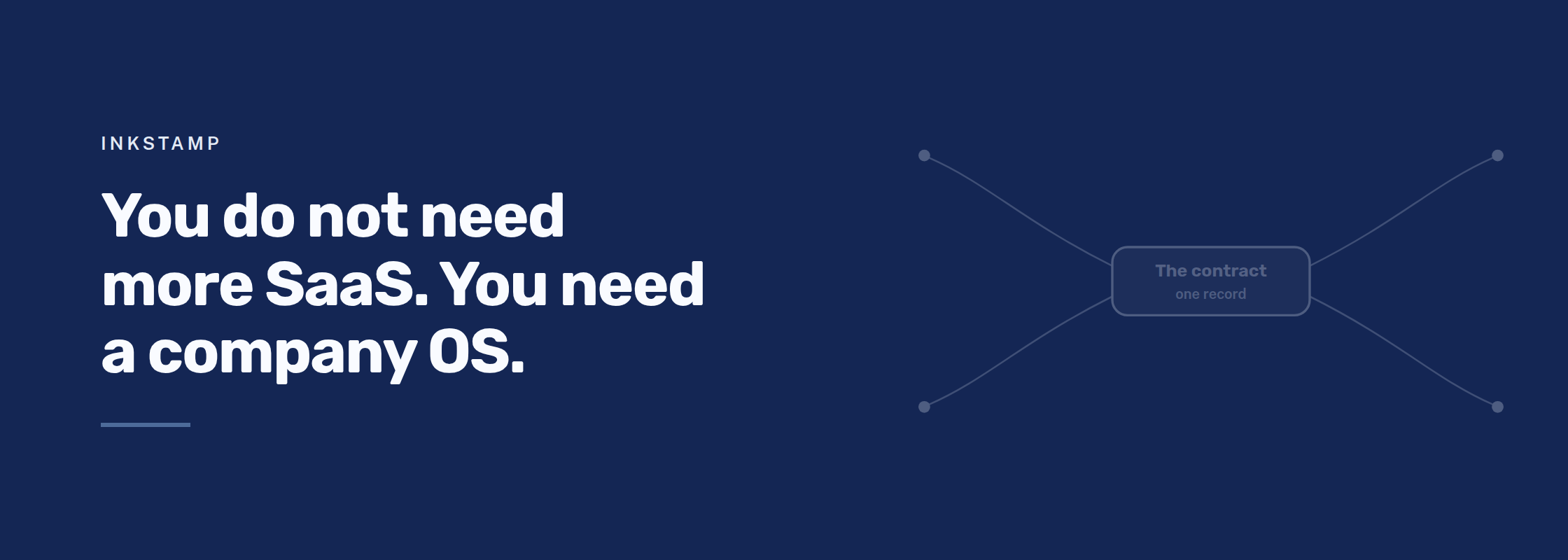

I know what the software promised, because I sold it.
Order from chaos. Put your information into the system, and order follows. That pitch is over thirty years old, and big companies still keep people whose whole job is correcting the data in their systems. Scale that down to a forty-person company and it becomes a real problem: they cannot afford people to maintain data, and when they pay for them anyway, that attention comes straight out of the customer and the product.
Every part of the job got its own system. Every system needs feeding, and the feeding is still done by people.
One document. Five systems. Five slightly different versions.
Here is what it looks like the day a new account signs at a forty-person company. Five people touch one signed contract, and each keys their slice into their own tool, from the signature page or from memory.
- Sales, in the CRM. Marks the deal won. Keys in the value.
- Finance, in the ledger. Builds the invoice from the payment terms.
- Legal, in e-signature. Keeps the signed copy on file.
- Operations, in the project tool. Turns deliverables into a project.
- Everyone, in team chat. Someone posts: "They signed."
And the renewal date, the thing everyone will care about most in a year, usually gets entered nowhere. Five copies of one fact, already out of agreement, and the one fact that matters most has no home at all.
It was never five facts.
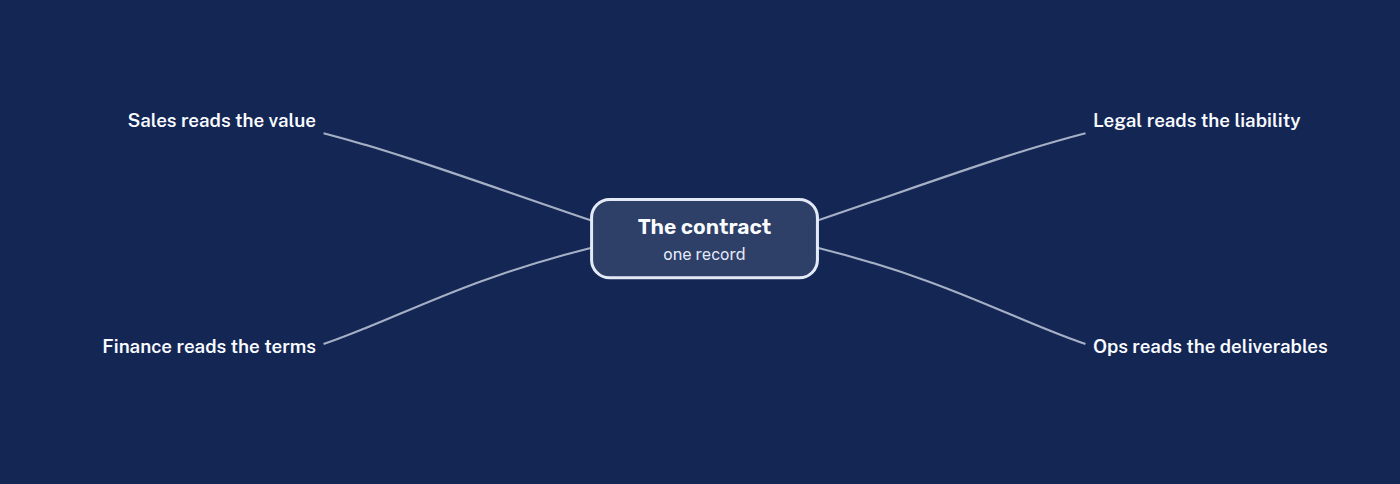
It is one contract, and everyone needs a different slice. Sales needs the value. Finance needs the terms. Legal needs the liability. Operations needs the deliverables.
The vendors all say their piece helps you run the business. None will say out loud that the pieces do not talk to each other, and that keeping their copies in agreement quietly became your job.
Record it once, let every view read from it, and the disagreements have nowhere to live.
The signed contract lands once. That is the whole workflow.
Not a better database. Not another integration. The agent reads. And here is the part the industry never made visible: the agent is not buried in the plumbing. It is a named coworker, working in a room the company owns, that asks before anything touches the books.
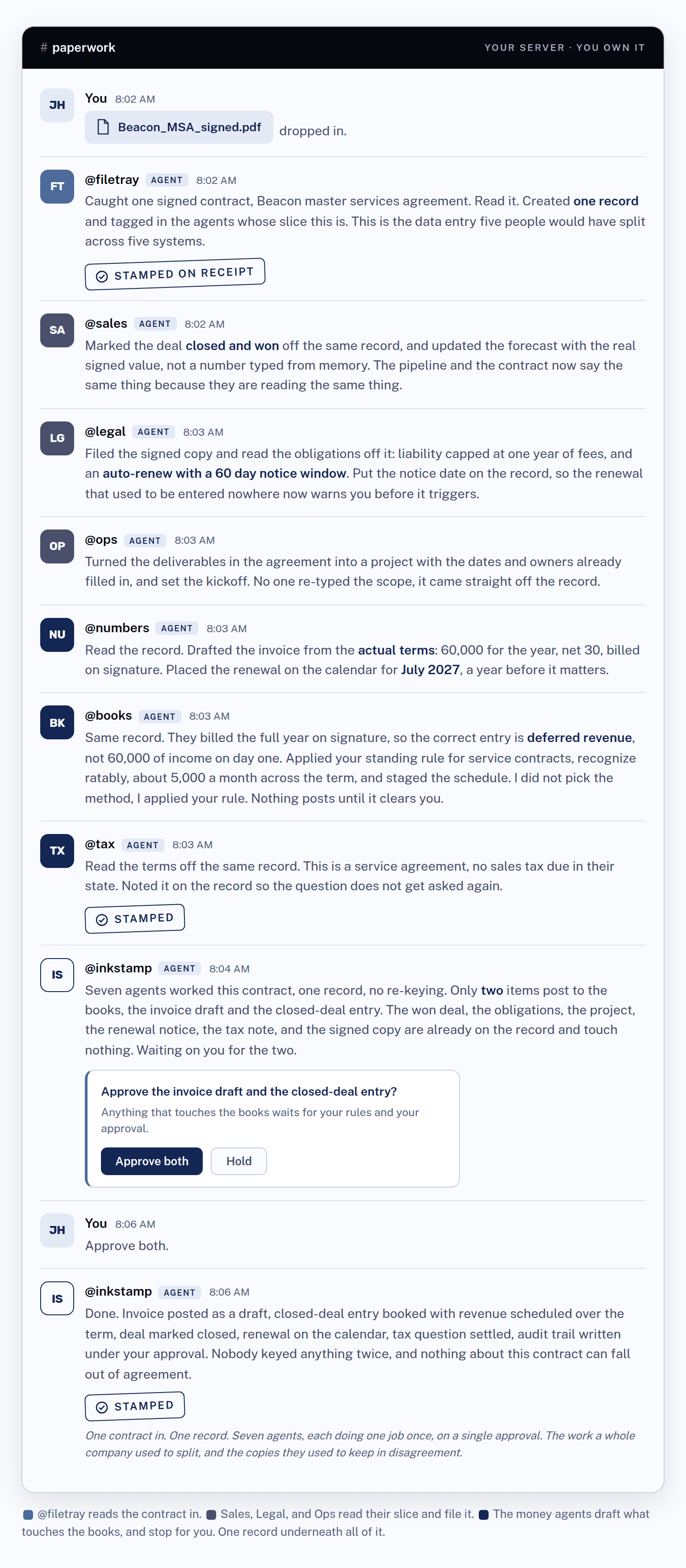
One record. Every view reads from it.
The fact goes into a graph, one connected record of the business. It was never five facts, so there are not five copies to keep in agreement. There is one, and each part of the company reads the slice it needs.
And the one that used to fall through has a home now. The renewal is on the calendar a year before anyone would have thought to look, because it was read off the same record as everything else, not remembered by a person who has since moved on.
The agent is a coworker, not a plug-in.
This is what is new. For my whole career the "system" was a place you fed. Now the worker sits in the room with you, under its own name, and you can watch it work and hold it to account. That is what makes governed AI legible to a forty-person shop: you can see exactly what it did, and it does not touch the books without you.
- It has a name. @sales, @legal, @ops, @numbers, @books, @tax, @filetray, @inkstamp. Named coworkers with their own identity, not a bot hidden inside a menu. You always know which one did the work.
- It asks before the books. The agent works on its own, then stops and asks when a fact touches money. Your rules, your approval, one tap. Control is the point, not an afterthought.
- It leaves a stamp. Every action ends with an audit trail: who did it, under whose approval, when. The same posture the product sells is how the work itself runs.
- Your tools can stay. The record reads from the stack you already run. Nothing to rip out. You can just stop buying the next one.
A company OS would finally deliver what this industry has been promising for over thirty years. Not by adding a system to feed, but by letting the worker feed itself, once, under your control, into one record every view can read.